
Justice 4 EI Misconduct: When Administrative Leave Became “Misconduct” (Final Q&A with J4EIM)
Code M on an ROE: The Legal Questions Employers Must Answer. A final discussion with J4EIM on ROE misclassification, automation of EI denial, and pathways to accountability

Update:
The dedicated page on the Self-Representation 101 portal has been also updated with more details and next steps to those who have been affected: https://en.gorodnichy.ca/members/self-representation-101/lwop-as-m
Two more articles were written to since this article was published: one in English, another in French.

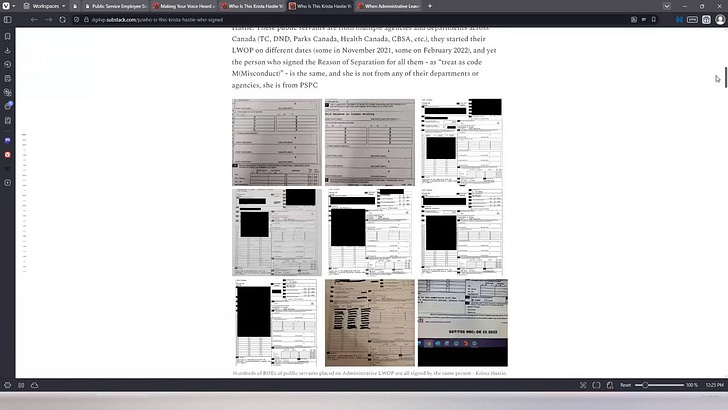
The Final Episode with J4EIM: Why This Q&A Matters
This fourth and final episode of Justice 4 EI Misconduct closes a difficult but necessary series. It focuses on a specific use case: public servants placed on Administrative Leave Without Pay (LWOP) for non-compliance with a vaccination mandate, who later discovered that their Record of Employment (ROE) listed Code M (Misconduct) — triggering denial of Employment Insurance.
In this episode, Matthew (known as J4EIM) responds directly to a question many affected members continue to ask: How did this happen, was it lawful, and what can be done now?
The answer is neither simple nor comfortable. Watch the interview and see for yourself.
The discussion, which includes an overview of possible next steps for affected members, is provided below. The post-recording Q&A responses are provided in Appendix A.
Previous Episodes:
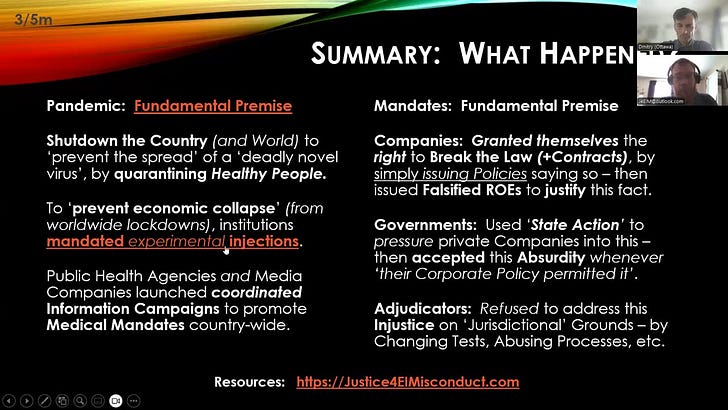
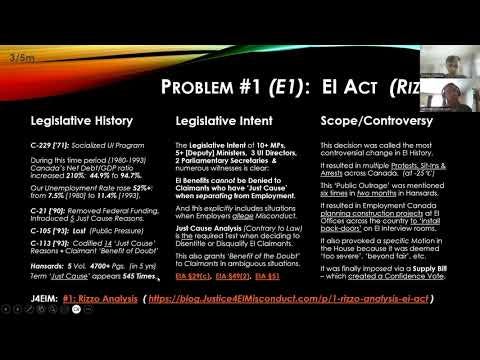
Watch It from YouTube:
Discussion:
The Core Question
Many members were placed on administrative LWOP for non-compliance with the Vaccination Mandate and subsequently received Code M (Misconduct) on their ROEs, resulting in EI denial.
How could this situation have occurred?
Did the employer violate legal or procedural requirements?
What options exist to pursue justice, transparency, and accountability — with the employer, the union, and Service Canada (including Employment and Social Development Canada and EI)?
J4EIM’s Central Point: This Is Not a Technicality
J4EIM’s response begins with a clear statement:
Knowingly placing a false reason code on an ROE is potentially a criminal offence.
This is not an interpretation invented after the fact. The warnings are explicit and repeated:
On the ROE itself
In the ROE Guide
In federal legislation
In pandemic-specific ESDC guidance
Anyone certifying an ROE legally attests that the information is accurate and complete (See Image below)

Code N vs Code M: The Difference That Changes Everything
The distinction between Code N and Code M is not semantic.
Code N — Leave of Absence
Used when an employee leaves the workplace temporarily, including any period of unpaid leave.
Code M — Dismissal or Suspension
Used when the employer initiates separation because the employee was dismissed or suspended — typically following disciplinary processes.
An administrative LWOP, by definition, is not disciplinary.
Yet many ROEs were certified with Code M — even where no disciplinary proceedings occurred and employment technically continued.
Certification, Knowledge, and Legal Exposure
Box 22 on every ROE contains a certification statement confirming that:
The issuer is aware that making false entries is an offence and certifies that all statements are true.
The ROE Guide reinforces this:
Misrepresenting the reason for issuing an ROE is a serious offence
“Knowingly” means fully aware, with full knowledge of the facts
Fines or prosecution may apply
J4EIM raises a narrow but unavoidable question:
If HR or Payroll staff knew the employee was on approved administrative leave and still certified Code M, why?
Intent is not assumed — but it cannot be ignored.
If there was intent to deceive, the threshold for criminal liability may be met.
If there was no intent, certifying a known incorrect code raises questions of negligence — especially given the explicit warnings.
Criminal Code §398: Why It Was Raised
J4EIM references Criminal Code section 398, which addresses falsifying employment records with intent to deceive.
This provision exists for a reason. ROEs directly affect eligibility for EI benefits. A false code does not merely mislabel employment status — it deprives individuals of income support.
Pandemic Guidance Made This Clearer, Not Murkier
Because of widespread confusion during COVID-19, ESDC issued explicit guidance on ROEs for vaccination-related absences.
That guidance states:
When an employee refuses to comply with a mandatory COVID-19 vaccination policy and does not report to work, employers should use Code E (Quit) or Code N (Leave of Absence).
Not Code M.
This guidance removes any claim that employers were left without direction.
Why “Further Information Contact” Exists
For ROEs issued with Code M, the ROE system requires a Further Information Contact — someone fully aware of the facts who can answer questions from Service Canada investigators.
This safeguard exists precisely because Code M is serious, exceptional, and consequential.
Its routine use for administrative LWOP contradicts the structure of the system itself.
What This Episode Ultimately Does
This final episode does not issue verdicts. It does something more important.
It:
Clarifies the legal framework
Identifies where procedures may have failed
Explains why this issue is not “just EI”
Restores language, structure, and accountability to a process that lost all three
For affected members, it also outlines why self-representation, documentation, and persistence matter — especially when institutional actors remain silent.
Why This Is the End of the Series — and Not the End of the Issue
This is the fourth and final Justice 4 EI Misconduct episode. Not because the issue is resolved, but because the facts are now on the record.
What happens next belongs to those who were affected — and to the institutions asked to explain their actions.
Next Steps: What You Can Do About It
For members affected by a Code M (Misconduct) issued in connection with administrative LWOP, the end of this series is not an endpoint. It is a transition from understanding the issue to acting on it. The following steps focus on fact-finding, accountability, and institutional clarity, not confrontation.
1. With Your Employer: Establish the Documentary Record
The first priority is to understand how and why Code M was assigned in your specific case.
Members can file Access to Information and Privacy (ATIP) requests to obtain:
Internal HR, Labour Relations, and Payroll communications
Guidance documents, decision trees, or templates used during the vaccination mandate period
Emails or instructions referencing ROE coding for administrative LWOP
Any legal opinions or policy interpretations relied upon
Records identifying who authorized and certified the ROE
The objective is not speculation about intent, but evidence of process:
Who made the decision
On what basis
Using which guidance
With what level of awareness of ROE requirements
This documentation is essential for any subsequent review, correction request, grievance, or external inquiry.
2. With ESDC / Service Canada: Question the System, Not Just the Outcome
Many members understandably focus on the EI denial decision itself. However, the deeper issue may lie upstream — in how ROEs were accepted, interpreted, or acted upon.
Members can seek clarity from ESDC and Service Canada on:
How ROEs with Code M for administrative LWOP were assessed
Whether pandemic-specific guidance on vaccination-related absences was applied consistently
What validation or verification steps are required when employers certify Code M
Whether systemic issues were identified across departments
What recourse exists when an ROE is later shown to be incorrectly coded
This is not limited to individual benefit entitlement. It is about process integrity in a system that relies heavily on employer-certified information.
3. With Your Union: Seek Recognition of the Structural Issue
For many members, union involvement stalled once EI was denied or once the issue was framed as an individual benefits matter. This series highlights why that framing is incomplete.
Members can approach their union to seek:
Formal acknowledgment that administrative LWOP coded as misconduct is a systemic issue
Clarification of what advice or guidance the union relied on during the mandate period
Disclosure of any discussions with employers or ESDC regarding ROE coding
Support in pursuing transparency, corrections, or policy review
Assistance for members choosing to self-represent, where applicable
Even where unions determine that traditional grievance paths are limited, recognition of the problem itself matters. Silence can unintentionally normalize practices that warrant scrutiny.
Why These Steps Matter
None of these actions require alleging wrongdoing. They require asking documented questions in systems that depend on documentation.
Justice, transparency, and accountability do not begin with conclusions — they begin with records.
This final episode, and this series as a whole, exists to ensure that affected members are no longer left navigating these questions alone, without language, structure, or reference points.
What happens next depends on what the records reveal — and on whether institutions are prepared to respond to what their own documents show.
Watch the series
Episode #1: Case Summary – About the J4EIM Project & Employment Insurance
Episode #2: The 'Problem' – Understanding the E.I. Program, its Legislation & Legal Requirements
Episode #3: Their 'Solution' – How EI Processes were Engineered to Mass-Deny Claims
Episode 4 (Final): Q & A, Next Steps - for those who received "Treat as Code M"
Related use case and background
Use Case: LWOP treated as Misconduct
https://en.gorodnichy.ca/members/self-representation-101/lwop-as-mAdditional context
https://dg4vp.substack.com/p/self-representation-101-record-of
References
Criminal Code of Canada, s. 398 — Falsifying Employment Record
https://laws-lois.justice.gc.ca/eng/acts/c-46/section-398.htmlROE Guide — Reasons for Issuing an ROE
https://canada.ca/en/employment-social-development/programs/ei/ei-list/reports/roe-guide.htmlESDC Guidance: ROEs during COVID-19 (archived)
https://web.archive.org/web/20241126215225/https:/www.canada.ca/en/employment-social-development/programs/ei/ei-list/ei-employers.html
Disclaimer
This article’s opinions are that of the author, not of any institution. It is not for legal or medical advice.
Acknowledgment
This article was written with assistance from ChatGPT using the prompt:
“Write a DG4VP Substack article in WA format about the final fourth episode of Justice 4 EI Misconduct with J4EIM, based on the video title and description, a detailed member question about Code M on ROEs for administrative LWOP, and J4EIM’s response citing ROE certification requirements, Criminal Code s.398, the ROE Guide, and ESDC COVID-19 guidance.”
Based on approximately 1,300 words and a collaborative drafting process with the author.
ChatGPT was also used to ensure political neutrality, factual accuracy, and alignment with the Public Servant Code of Values and Ethics.
Read more about why and how I use ChatGPT to write my Substack articles here.
Support This Work
If you believe in open dialogue, informed choice, and exploring underreported perspectives, help keep the conversation going — like and share this article on your preferred platform.
You can follow me here:
LinkedIn: https://www.linkedin.com/in/dmitry-gorodnichy/
Facebook: https://www.facebook.com/dmitry.o.gorodnichy/
Twitter/X: https://x.com/Gorodnichy_Dm
YouTube: https://www.youtube.com/@Dr.Dmitry.Gorodnichy
My articles are, and will always remain, free to read.
Appendix A: Post-interview Q&A
Question:
We have many members who received Code M (for Misconduct) when they put on administrative LWOP for non-compliance with Vaccination Mandate, and then denied EI as a result.
Can you explain how this situation could have occurred, whether the employer may have violated any legal or procedural requirements, and what steps members can take to seek justice, transparency, and accountability from their employer, their union, and Service Canada (including ESDC and EI)?
Answer:
Knowingly putting a False Reason Code on an ROE is potentially a Criminal Offence. The warnings about this are everywhere, on all the relevant government documentation, including the ROE itself in Box 22. (see below) If they knew that I was on an Approved Administrative Leave of Absence [’N’] – and still employed – and instead Certified that I was ‘Dismissed or Suspended’ [’M’] (without any Disciplinary proceedings) anyways, Why?
I cannot read their minds to determine their Intent – nor am I implying any – but my ROE clearly contains a Code that the Issuer knew was wrong – and they Certified it (legally swore to its accuracy) anyways...
This raises serious issues that need to be considered [or further investigated]. If there was ‘intent to deceive’ this is a Criminal Offence. If not, then why did they knowingly Certify an incorrect Reason Code, considering all the warnings? Could that be deemed negligence considering the all following?
CC §398: ‘Falsifying Employment Record’
https://laws-lois.justice.gc.ca/eng/acts/c-46/section-398.html
“§398: Every one who, with intent to deceive, falsifies an employment record by any means, including the punching of a time clock, is guilty of an offence punishable on summary conviction.”
And Box 22 on all ROEs says: (ROE Image)

“I am aware that it is an Offence to make False Entries and hereby Certify that All Statements on this Form are True.”
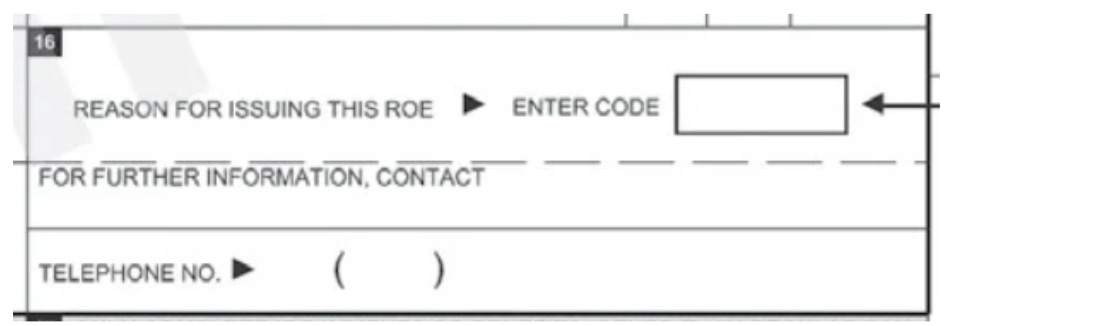
And the ROE Guide says: (Box 16 & Box 22)
Reasons [List]: https://canada.ca/en/employment-social-development/programs/ei/ei-list/reports/roe-guide.html#h2.2-3.17
Box 16: “It is a serious Offence to misrepresent the reason for issuing an ROE. [(i.e. in Box 16)] If you knowingly enter a false or misleading reason for issuing an ROE, you may be subject to fines or prosecution. Knowingly means fully aware, ‘with full knowledge of the facts’.”
Code N – Leave of Absence: “Use Code ‘N’ when the employee is leaving the workplace temporarily to take a leave of absence. For example, if the employee is taking any period of unpaid leave.”
Code M – Dismissal or Suspension: “Use Code ‘M’ when the employer initiates the separation from employment for any reason other than layoff or mandatory retirement (that is, the employee is leaving the workplace because he or she has been Dismissed by the employer). Also use this code when the employee is Suspended from their employment.”
Box 22: “In this block, the person who is completing the ROE knowingly certifies that the information on the ROE is correct.”
This is why Box 16 has an option for ‘Further Info Contact’: If the HR/Payroll staff submitting the ROE are not “fully aware, with full knowledge of the facts” they must specify someone who is, who can answer mandatory questions when SC/EI Investigators call – which is required for all ‘M’ Codes.
And lastly, because of all the confusion during the pandemic, ESDC issued special guidance called:
ROEs during COVID-19 (Original: 2021-10-15 & Final: 2024-11-08)
Block 16: Reason for Issuing this ROE: COVID-19 Vaccination
“When the employee doesn’t report to work because they refuse to comply with your mandatory COVID-19 vaccination policy, use code E (quit) or code N (leave of absence)“ (Bold in Original on ESDC Site)
Code ‘M’ can only be used for ‘Dismissal or Suspension’, which are not ‘Administrative’ issues.